In recent years, foreign travelers like digital nomads have been accused of being “the new gentrifiers” or “temporary colonizers.” In particular, they are blamed for driving rent prices up in many cities around the world, effectively pushing locals out of their homes and neighborhoods.
But is this really the case? I haven’t thoroughly and properly researched this, but I’ve found some interesting takes in this Reddit thread that are worth discussing.
On one hand, it’s true that many nomads treat destinations like “bartering products.” They select the trendiest places to live, often arriving with higher disposable incomes. This triggers a chain reaction: local house owners realize that “1 month’s rent from the gringo gets me 3 months’ rent from a local” and start capitalizing on it. As demand increases in certain areas, other businesses like restaurants and cafes also raise their prices, and sometimes abandon aspects of local culture to cater to the foreign influx (e.g. tapas bars asking you to book in advance, or kicking you out once you finish your food).
This is a form of gentrification: on one hand, it stimulates economic activity and growth. On the other hand, it disrupts the local status quo, displaces low-income communities, and exacerbates cultural differences.
But the question remains: do digital nomads truly wield such significant economic influence? Are they the main cause behind rising housing costs and the resulting social impact?
With their loud social media presence and sometimes arrogance, they make for the perfect scapegoat for frustrated locals. However, the reality is more nuanced. Several factors contribute to skyrocketing rent prices:
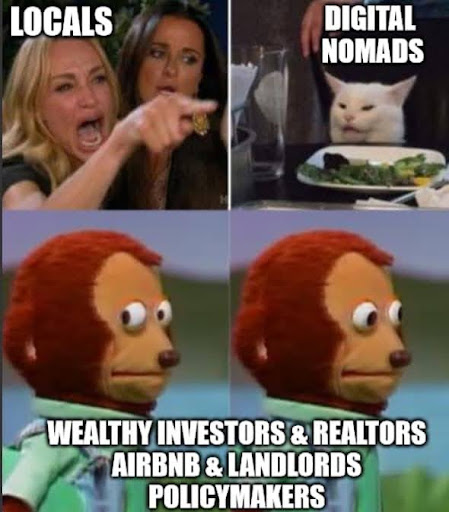
- Super-wealthy investors: High-net-worth individuals and companies, often disconnected from local communities, buy properties purely as investments. They either leave these properties vacant or use them for short-term rentals, driving up prices and reducing housing options in the long-term rental market.
- Housing as investment: Airbnb and similar services have turned housing into an investment opportunity for the middle class too, sparking a boom in short-term rentals. They happily take their cut without addressing the social impact. Local hosts, too, are perfectly happy to squeeze tourists’ and nomads’ pockets while they take the blame for the rising rents.
- Policymakers: The people in government bear the most responsibility, since they have the power to enforce laws that regulate the market. In most places, they have acted too little, too late.
I made a meme to sum it all up:
So, while digital nomads do affect rent prices in some cities, this impact is “overestimated based on feelings rather than studies.” The rent price crisis is a much bigger issue that can only be solved at the institutional level. That said, as a nomad, I think we should aim to better understand the problem and, at the very least, try not to exacerbate it — whether that’s by refusing to pay unreasonable rents or by better integrating into the local culture.