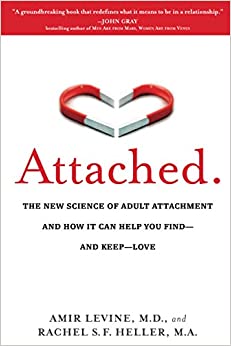
Summary
Attachment styles come from a mix of childhood, genes and early romantic experiences.
Attachment doesn’t equal weakness. On the contrary, in order to thrive and grow as human beings we need a secure base from which to derive strength and comfort. The better dependent we are, the most daring we become.
There are two main attachment styles: anxious and avoidant. The anxious fears not being enough for the partner, asking for more intimacy than their partner can provide. The avoidant fears being hurt by the partner, struggling when the partner wants to get too close. Ultimately, they are both afraid of being let down.
To form a secure attachment you should become aware of your needs, learn how to express them properly, and learn to identify partners who can meet them.
Book Notes
Among adults, the prevailing notion is still that too much dependence in a relationship is a bad thing. But attachment is not weakness. It’s genetic predisposition.
Attachment theory teaches that controlling your own emotional needs and soothe yourself in the face of stress is simply wrong. You need someone to meet your needs, you are not too needy. Attachment principles teach us that most people are only as needy as their unmet needs. When their emotional needs are met, and the earlier the better, they usually turn their attention outward. This is sometimes referred to in attachment literature as the “dependency paradox”: The more effectively dependent people are on one another, the more independent and daring they become.
Anxious
Anxious people crave intimacy, are often preoccupied with their relationships, and tend to worry about their partner’s ability to love them back. General traits:
- Wants a lot of closeness, you fear you want more than your partner does
- Expresses insecurities, worries about rejection
- Unhappy when not in a relationship
- Not expressing what’s bothering him/her, expect you to guess
- Takes everything personally
- Excessive thinking about the partner daily
- Lets the partner set the tone of the relationship
- Fears that small acts will ruin the relationships
- Very sensitive to small fluctuations in your partner’s moods and actions
- Believes must work hard to keep the partner interested
- Suspicious of being cheated on
- Put partner on a pedestal, underestimate personal qualities and overestimate his/hers
- Tendency to deny own wishes to avoid being too needy
Avoidant
Avoidant people equate intimacy with a loss of independence and constantly try to minimize closeness. General traits:
- Sends mixed signals to maintain independence, no clear intention (interested, not interested)
- Say things like “I’m not ready to commit” but stay in a relationship nonetheless, sometimes for years.
- Pull away when things go well (e.g. not calling for days after a good date).
- Value his/her independency greatly
- Devalues your previous relationships
- Quick to think negatively about your partners, focus on small imperfections (way she talks, dresses, eats.)
- Flirt with others to introduce uncertainty in the relationship
- Crave their ex partners back after a while, forgetting “what was wrong with them”
- Uses distancing strategies - emotional or physical
- Unrealistic romantic view of how a relationship should be
- Fears being taken advantage of by the partner
- Rigid view of a relationship and uncompromising rules
- Has difficulty talking about what’s going on between you
- During a disagreement needs to get away or “explodes”
- Unwilling to engage in self-disclosure, unlikely to ask for help
- Uncomfortable with intimacy, avoid closeness (e.g. sex, or sharing the bed)
- Their great self-reliance makes them unable to closely connect with others
The anxious-avoidant trap
Anxious are more likely to date avoidants: these attachment styles complement each other. Each reaffirms the other’s beliefs about themselves and about relationships. As the saying goes: “Opposites attract each other”.
The anxious believe they want more intimacy than their partner can provide, as is their anticipation of ultimately being let down by significant others. The avoidant believes the anxious want to pull them into more closeness than they are comfortable with, and therefore exit relationships.
Why are anxious people still single? There is something wrong with them (internal reason). Why are avoidant people still single? They have not met the right person (external reason).
Secure attachment
Secure people feel comfortable with intimacy and are usually warm and loving. General traits:
- Reliable and consistent
- Makes decisions together
- Flexible view of relationships
- Can reach compromise during arguments
- Not afraid of commitment or dependency
- Doesn’t view relationship as hard work
- Closeness creates further closeness
- Confidently expresses needs (e.g. teach other in bed)
- Respond sensitively to the partner distress
- Assume your partners’ intentions are good
- Doesn’t play games
- Introduces friends and family early on
- Encourage partner’s growth. Boost their self-esteem.
- Share comfortably successes and failures with partner
Remember that attachment styles are stable but plastic—becoming more secure is an ongoing process. Whenever a new concern, dissatisfaction, or conflict occurs, enter the new information. This will help in your quest to break your insecure patterns.
Effective communication
Effective communication is about cutting to the chase and directly expressing your needs to the partner. It aims to achieve two goals:
- To choose the right partner. Effective communication is the quickest, most direct way to determine whether your prospective partner will be able to meet your needs. Your date’s response to effective communication can reveal more in five minutes than you could learn in months of dating without this kind of discourse.
- To make sure your needs are met in the relationship. By spelling out your needs, you are making it a lot easier for your partner to meet them. He or she doesn’t need to guess whether something is bothering you—or what that something is.
Effectively expressing your emotional needs is even better than the other person magically reading your mind. It means that you’re an active agent who can be heard, and it opens the door for a much richer emotional dialogue.
It’s important to remember that even with effective communication, some problems won’t be solved immediately. What’s vital is your partner’s response—whether he or she is concerned about your well-being, has your best interests in mind, and is willing to work on things.